OMAD for Fitness Goals: Benefits, Risks, and Smart Meal Planning
Learn how OMAD works, its potential benefits and risks, and how to build a balanced meal that supports your fitness goals.
OMAD for Fitness Goals: Benefits, Risks, and Smart Meal Planning
What Is OMAD?
OMAD, short for “One Meal a Day,” is a strict form of intermittent fasting where you eat all your daily calories in one meal or a short eating window, then fast for the rest of the day.
For fitness goals, OMAD can be attractive because it feels simple: fewer meals, less snacking, and easier calorie control. But fitness is not only about eating less. Your body also needs enough protein, carbohydrates, fats, vitamins, minerals, hydration, and recovery.
Potential Benefits of OMAD for Fitness
OMAD may help some people reduce total calorie intake, which can support fat loss when combined with strength training and daily movement. The main reason is not magic; it usually works because eating once per day can make it harder to overeat.
Some people also like OMAD because it simplifies meal planning. Instead of preparing several meals, they focus on one balanced plate. This can help busy people stay consistent.
Research on one-meal-per-day eating suggests it may reduce body weight in some adults, but it can also affect energy availability and may not suit everyone.
Risks and Downsides
OMAD can be difficult for active people because one meal may not provide enough fuel for training and recovery. If calories or protein are too low, you may feel tired, perform poorly, or lose muscle over time.
Common issues may include strong hunger, headaches, irritability, overeating during the meal, digestive discomfort, and poor sleep. For some people, restrictive fasting can also increase an unhealthy relationship with food.
OMAD is not recommended without medical guidance for pregnant or breastfeeding women, teenagers, people with diabetes, people with a history of eating disorders, or anyone taking medication that requires food timing.
Is OMAD Good for Muscle Gain?
For muscle gain, OMAD is usually not ideal. Building muscle requires progressive strength training, enough calories, enough protein, and good recovery. Many people find it easier to meet these needs across two to four meals.
If you still choose OMAD, your meal must be carefully planned. You need a strong protein source, enough carbohydrates to refill energy stores, healthy fats, and plenty of colorful plant foods.
Smart OMAD Meal Planning
A fitness-focused OMAD meal should not be a random large dinner. Build it like this:
Start with protein such as chicken, fish, eggs, Greek yogurt, lean beef, tofu, lentils, or beans. Add complex carbohydrates like rice, potatoes, oats, whole-grain bread, or quinoa. Include healthy fats from olive oil, avocado, nuts, seeds, or tahini. Add vegetables and fruit for fiber, potassium, magnesium, and antioxidants.
Hydration matters too. During the fasting window, drink water. Some people may also need electrolytes, especially if they sweat a lot.
Best Timing for Training
If performance is your priority, train close to your meal. Many people feel better training shortly before eating, then using the OMAD meal as a recovery meal. Others prefer eating first and training later, but this can feel uncomfortable if the meal is very large.
For intense workouts, long cardio, or heavy strength sessions, a less strict fasting plan may work better, such as 16:8 or two meals per day.
A Simple OMAD Fitness Plate Example
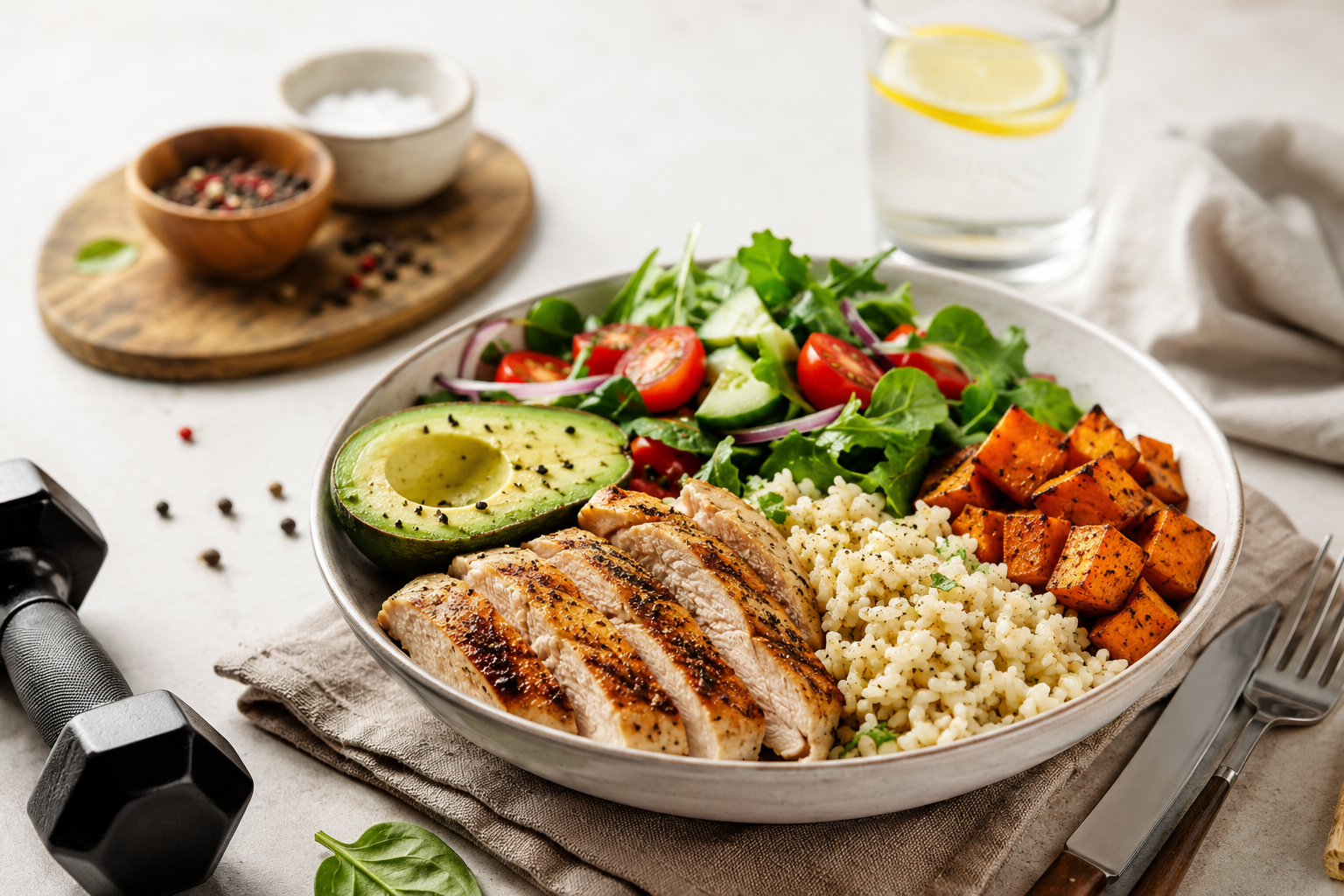
A balanced OMAD meal could include grilled chicken or tofu, rice or potatoes, a large salad with olive oil, Greek yogurt or legumes, fruit, and a handful of nuts. This gives protein, carbs, fats, fiber, and micronutrients in one meal.
The goal is not to eat as little as possible. The goal is to eat enough quality food to support your body.
Final Thoughts
OMAD can help some people with fat loss and meal simplicity, but it is not the best choice for everyone. For fitness goals, it must be planned carefully to protect energy, muscle, recovery, and long-term health.
If OMAD makes you feel weak, obsessed with food, or unable to train well, choose a more flexible fasting method. The best plan is the one you can follow safely, consistently, and happily.